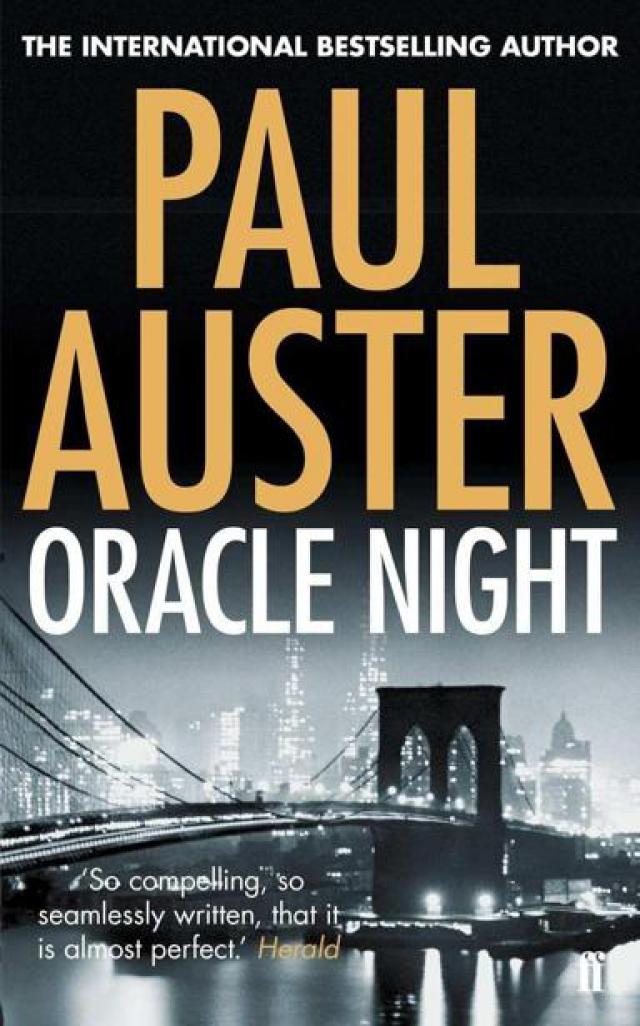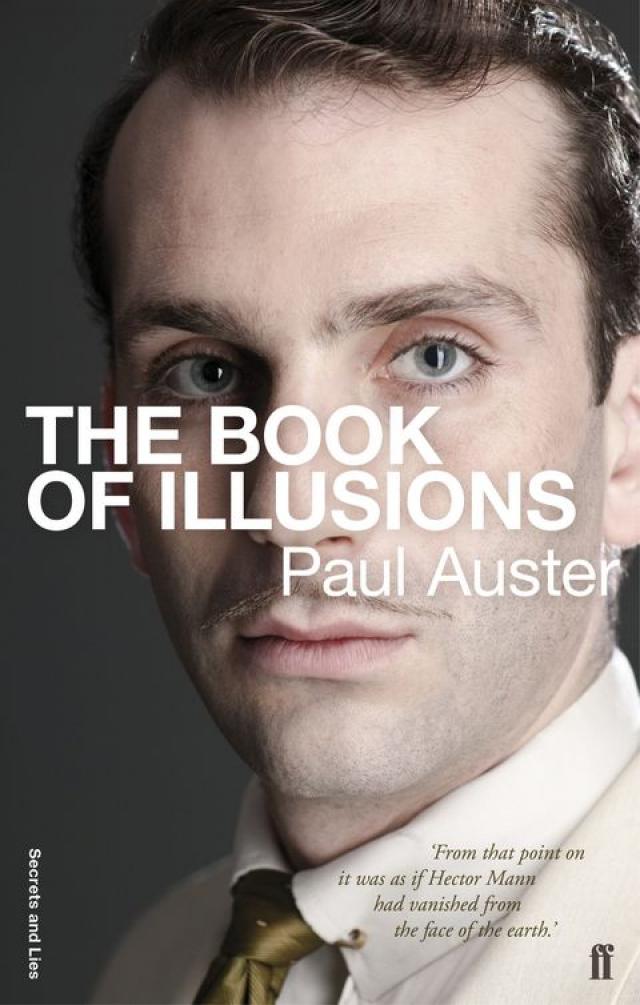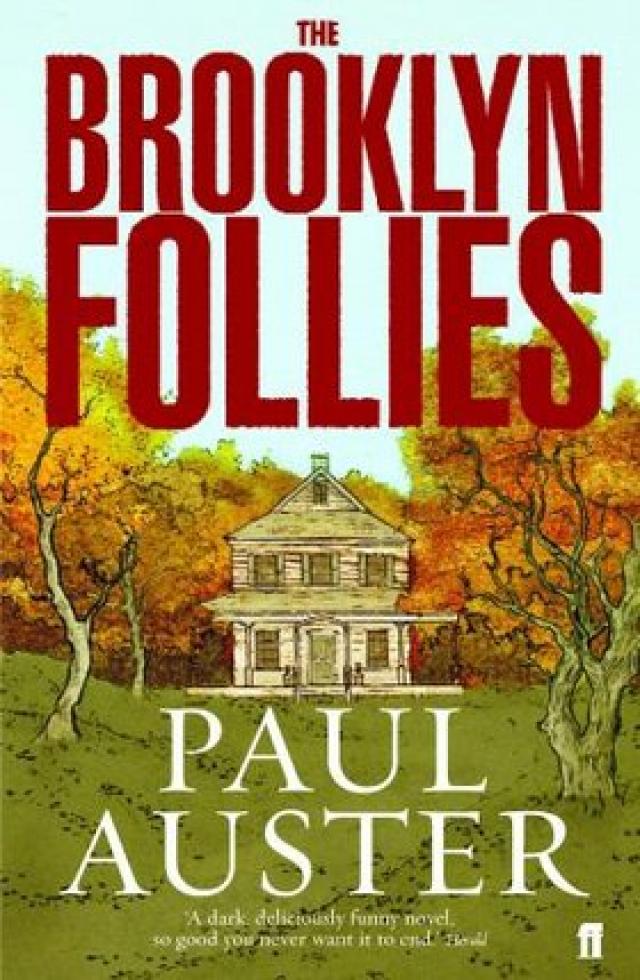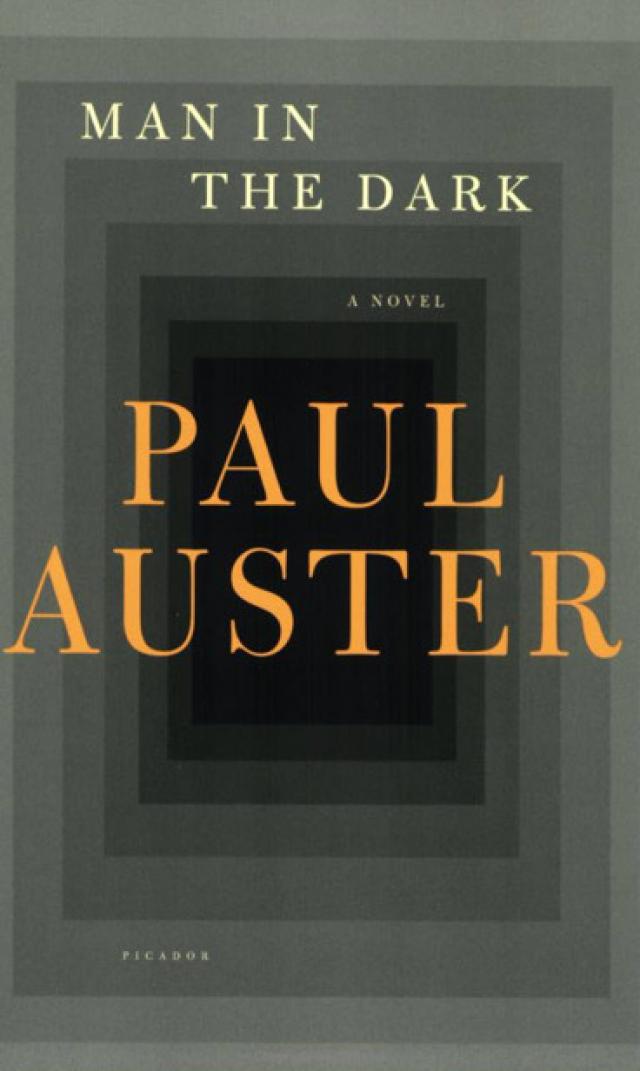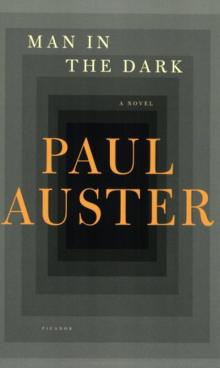
A Washington Post Best Book of the Year"Man in the Dark is an undoubted pleasure to read. Auster really does possess the wand of the enchanter."--Michael Dirda, The New York Review of BooksFrom a "literary original" (The Wall Street Journal) comes a book that forces us to confront the blackness of night even as it celebrates the existence of ordinary joys in a world capable of the most grotesque violence. Seventy-two-year-old August Brill is recovering from a car accident at his daughter's house in Vermont. When sleep refuses to come, he lies in bed and tells himself stories, struggling to push back thoughts about things he would prefer to forget: his wife's recent death and the horrific murder of his granddaughter's boyfriend, Titus. The retired book critic imagines a parallel world in which America is not at war with Iraq but with itself. In this other America the twin towers did not fall and the 2000 election results led to secession, as state after state pulled away from the union and a bloody civil war ensued. As the night progresses, Brill's story grows increasingly intense, and what he is desperately trying to avoid insists on being told. Paul Auster is the bestselling author of The Book of Illusions, and The New York Trilogy, among many other works. In 2006 he was awarded The Prince of Asturias Prize for Literature and inducted into the American Academy of Arts and Letters. Among his other honors are the Independent Spirit Award for the screenplay of Smoke and the Prix Médicis étranger for Leviathan. He has also been short-listed for the International IMPAC Dublin Literary Award (The Book of Illusions), the PEN/Faulkner Award for Fiction (The Music of Chance), and the Edgar Award (City of Glass). His work has been translated into thirty-five languages. He lives in Brooklyn, New York. Longlisted for the International IMPAC Literary AwardA work of fiction with a dark political twist, Paul Auster's Man in the Dark speaks to the realities that America inhabits as wars flame around the world. Seventy-two-year-old August Brill is recovering from a car accident in his daughter’s house in Vermont. When sleep refuses to come, he lies in bed and tells himself stories, struggling to push back thoughts about things he would prefer to forget—his wife’s recent death and the horrific murder of his granddaughter’s boyfriend, Titus. The retired book critic imagines a parallel world in which America is not at war with Iraq but with itself. In this other America the twin towers did not fall and the 2000 election results led to secession, as state after state pulled away from the union and a bloody civil war ensued. As the night progresses, Brill’s story grows increasingly intense, and what he is so desperately trying to avoid insists on being told. Joined in the early hours by his granddaughter, he gradually opens up to her and recounts the story of his marriage. After she falls asleep, he at last finds the courage to revisit the trauma of Titus’s death. "This is perhaps Auster’s best book . . . Man In The Dark is so unlike anything Auster has ever written that it doesn’t make sense to compare it with his earlier work . . . Here we have multiple worlds and three generations . . . Auster’s book leaves one with a depth of feeling much larger than might be expected from such a small and concise work of art."—Stephen Elliott, San Francisco Chronicle "'I am alone in the dark, turning the world around in my head as I struggle through another bout of insomnia, another white night in the great American wilderness.' That's the first line from Paul Auster's new novel, Man in the Dark, and in some ways it's a perfect opening, as accurate as anything in describing the world, or worlds, you'll encounter over the coming 180 pages, a world turning in the head of Auster's 72-year-old everyman, August Brill. Auster has captivated generations of readers with his expansive imagination and style—a style that could be called lazy, in the best sense of the word, like a dog with his tongue out, rolling in the sun. But this, his latest novel, is something else. In this book, Auster has taken a turn similar to the turn Philip Roth took in American Pastoral and Leonard Michaels took in his Nachman stories. He's turned his attention outward, to the larger scope of the new century . . . Despite all the threads, which just barely connect, the book works beautifully. And though it's complicated to explain, it's an incredibly clear and easy book to read. Never a minimalist, Auster somehow takes on the largest questions of our time inside small tales of one family. With August as his storyteller, Auster has created a giant canvas out of what seems like a few effortless strokes, strokes often stunning in their simple beauty . . . This is perhaps Auster's best book. But maybe that's an unfair description. Man in the Dark is so unlike anything Auster has ever written that it doesn't make sense to compare it with his earlier work. Sure, you can recognize the author of Oracle Night and Brooklyn Follies. But it's as if that gentle mind has been joined by the ghost of Kurt Vonnegut, the adamant pacifist, author of Slaughterhouse Five and creator of Billy Pilgrim, a prisoner of war who became 'unstuck in time.' Here we have multiple worlds and three generations, also unstuck in time. But like Vonnegut's classic anti-war novel, Auster's book leaves one with a depth of feeling much larger than might be expected from such a small and concise work of art."—Stephen Elliott, San Francisco Chronicle "Are you a Paul Auster fan? Or, perhaps, are you emphatically not? Either way, read Man in the Dark, Auster's latest, which is inventive, tender, and darkly lined with the American predicament . . . Paul Auster has outdone himself, perhaps precisely by not trying to outdo anything."—John Brenkman, The Village Voice "On superficial acquaintance, Paul Auster’s new novel, Man in the Dark, appears to be merely the latest strain in a recent pandemic of dystopian fantasies, in this instance an alternate history of America in which the 9/11 terrorist attacks never happened but something even worse did: A second American civil war. In Auster’s parallel universe, the battle is joined not by the blue and the grey but rather by the Blue and the Red, as the bitterly disputed 2000 election degenerates into secession and an all-out battle for the Union. With 13 million dead and counting, the real-world election and its fusillades of lawsuits and partisan bomb-throwing suddenly seem terribly innocent in contrast to this ugly imagined world in which the only winner is gore. But as it turns out, Auster is after something entirely different, in this haunting and beautifully crafted work, than speculative fiction. The dystopia isn’t Auster’s but rather his central character’s, August Brill, the titular 'man in the dark'. Brill, a 72-year-old retired literary critic, is a deeply traumatized human husk who, like a character out of a Bergman movie, is sharing a house with his equally damaged and desperate daughter and granddaughter . . . The novel weaves in a number of other strands, including the story of Brill’s marriage to his late wife, which Brill recounts to Katya in beautiful and touching detail, a couple of harrowing tales of the Second World War, and the story of Nathaniel Hawthorne’s unhappy and aimless daughter Rose, the subject of a biography-in-progress by Brill’s own daughter Miriam. None of this is ever anything less than absorbing, and all of it connects in weird but fitting ways to the main narrative strand. But all of it, as it turns out, is just a precursor for the horror that Brill and Katya have been avoiding all along: The manner in which Titus died in Iraq. Without giving away too much of the story, I can say that, in preparation for this review, I viewed for the first time a genuinely terrifying true-life video I’d been assiduously avoiding for years. It will be obvious to you, after reading Man in the Dark, which video I am referring to, and why it is even more difficult for the main characters to view the somewhat fictionalized version featured in the novel. Nonetheless, they do watch it, well before the events of the novel, and they 'know it will go on haunting us for the rest of our lives, and yet somehow we felt we had to be there with Titus, to keep our eyes open to the horror for his sake . . . so as not to abandon him to the pitiless dark that swallowed him up.' This superb small novel isn't, despite initial impressions, about war or politics at all. It is about, in the face of guilt and horror, choosing whether to die and how, if that is the choice, to live. It is, at heart, about the stratagems that we, but in particular our best novelists, devise as a means of keeping us going in the face of the 'pitiless dark' that will swallow us all."—Michael Antman, PopMatters"Like Auster's The Brooklyn Follies, the challenge for the central figure of Man in the Dark is to absorb and accept the pain in the final chapters of his life. As the grief-stricken Katya checks in on her grandfather in the wee hours and begins to question him about his life and his decisions, it is clear that Brill is up to that task. For both characters in this surprisingly optimistic book, the morning comes."—Michael McHale, The New York Post "[Auster’s] magic has never flourished more fully than it does in Man in the Dark . . . The novel delivers intense reading pleasure from start to finish."—Chauncey Mabe, Orlando Sentinel"Vivid and arresting . . . a novel that manages, admirably, to be both apocalyptic and tender . . . The universe conceived by Auster is a world worth entering. And all that Brill struggles to forget in the pages of Man in the Dark translates into a book that deserves to be well remembered."—St. Louis Post-Dispatch"In one thread, an ailing 72-year-old named Brill convalesces in Vermont; in the parallel and more eventful thread, a man named Brick wakes up in a dangerous dream—America currently in the middle of a 21st-century civil war. Both plots are propulsive . . . [Auster is] a master of voice, an avuncular confidence man who can spin dark stories out of air."—Entertainment Weekly"Man in the Dark . . . crashes onto shore with a great burst. It suddenly adds up, and what it adds up to can leave you sleepless."—The Buffalo News"[A] fascinating new novel . . . As Auster reminds us, often the worst wars are those fought in one’s own mind."—MSNBC.com"Paul Auster’s twisty Man In The Dark concerns an alternate universe where two planes never toppled the World Trade Center. But Bush is still president, and a civil war rages in America . . . Takes us closer to understanding the emotional wreckage [of 9/11]."—GQ magazine"The real magician here is Auster. Our new century so far has been as bleak and troubled as Brill’s last years. This little dream of a novel invests it with something newly precious. Hope riffles the pages of this beautiful, heartbreaking book."—Paste"No writer is working harder than Auster to give America an existential literature to call its own, and Brill has a ruminative and slightly despairing mood that recalls Camus’ antiheros. Yet Man in the Dark isn't a headlong leap into emptiness . . . Auster treats the theme of isolation straightforwardly, studying the emotional costs of war through Brill’s own vivid memories and his family’s own recent heartbreak. In the process, he arrives at the provocative notion that war stories and love stories aren't as different as we might like to think."—Washington City Paper"The 'parallel' worlds visited and occupied by an aging intellectual's troubled mind and heart assume intriguing metafictional form in Auster's challenging novel . . . Auster's lucid prose and masterly command of his tricky narrative's twists, turns and mirrorings keep us riveted to the pages, as the permutations of August Brill's tortured progress toward self-understanding—and forgiveness—gather together and reconfigure elements from Auster's previous fictions: seemingly innocent characters' immurement in Kafkaesque nightmares; a known world transfigured into a hollowed-out, depopulated shell; the testing of an ingenuous hero's flawed powers. Auster pulls it all together brilliantly in a moving denouement that measures August Brill's intellectual solipsism against the doomed Titus's passionately declared need 'To experience something that isn't about me'—and finds wisdom and grace in both alternatives. Probably Auster's best novel, and a plaintive summa of all the books that—we now see—have gone into its making."—Kirkus Reviews (starred review)"Astute and mesmerizing."—Booklist (starred review)"Darker and more impactful than The Brooklyn Follies and with broader appeal than Travels in the Scriptorium, Auster's latest introduces August Brill, an elderly insomniac with a busted leg . . . To pass the night and ward off memories of his deceased wife and the war stories he's been collecting for 72 years, Brill creates Owen Brick. Brick awakens in a military uniform in a hole, having gone to bed as a young, married magician in Brooklyn. He finds himself in an alternate present: the United States is at civil war, the more liberal states having defected. He's been selected to kill the man who started the war, August Brill, and is threatened with death if he refuses. Brill ends his story of Owen abruptly, spending his night recalling the gruesome reality of the murder of his granddaughter's young boyfriend. Auster's trademark shattering ending that's not a twist but a revelation hauntingly revitalizes the book's theme of the horrors of war. This best-selling author with a cult following of literati finally offers one to please both fan bases."—Anna Katterjohn, Library Journal (starred review)"August Brill lies awake in his daughter's Vermont home, making up stories to fight against insomnia and depression. The stories coalesce around a character, Owen Brick, a professional magician transported to an alternate reality in which the U.S. fell into a civil war after the 2000 election. His mission: to end the war by assassinating August. Back in the real world, August is worried about his 23-year-old granddaughter, who moved back in with her mother after her boyfriend was killed in Iraq. The suspense about whether August's reality and the assassin in his fantasy will collide baits a sharp hook . . . Auster's juxtaposition of two worlds is compelling and intellectually rigorous in Auster's trademark claustrophobic hall-of-mirrors fashion."—Publishers Weekly
Read online