Indian emoticons, p.1
Indian Emoticons, page 1


Indian Emoticons
Patrizia Caiffa
Translated by Louise Rabour
“Indian Emoticons”
Written By Patrizia Caiffa
Copyright © 2014 Edizioni Haiku
All rights reserved
Distributed by Babelcube, Inc.
www.babelcube.com
Translated by Louise Rabour
Cover Design © 2014 Marianna Forte
“Babelcube Books” and “Babelcube” are trademarks of Babelcube Inc.
Table of Contents
Title Page
Copyright Page
Patrizia Caiffa | INDIAN EMOTICONS
Introduction
Glimpses
The Ganesh festival in Arambol
Fishermen and arranged marriages
Delhi Monsoon
Kalighat
Bhang shop
Special lassi
Emotions
Instants of eternity
Monsoons and fears
Return to paradise
Stories
After the tsunami
The good samaritan of Dadar station
The arrival of Babu at the Good Samaritan Mission
The “converted” missionary
Suicides among Indian farmers.
Recommended by Lonely planet
Chronicles
Between curfew and unrest, | in the golden prison of the valley of the lake
Kebabs and lessons on the lake at sunset
The angry gods of water and mud
The tea shop
The duck herd
ISBN 978-88-98149-00-1 | www.edizionihaiku.com
Patrizia Caiffa
*
INDIAN EMOTICONS
*
Those who love India know this:
we don’t know exactly why it is that we love her.
She is dirty, poor, infected, sometimes a thief and a liar,
often foul-smelling, corrupt, ruthless and indifferent.
Yet once we have met her we cannot be without her.
We suffer when we are away from her.
But love is like this:
instinctive, inexplicable, unbiased.
*
Tiziano Terzani, Un altro giro di giostra,
Longanesi
*
**
Introduction
*
*
The title “Indian Emoticons” is a word-play referring to all of the different emotions experienced in India, and narrated here in a youthful, brisk, lively style. Short stories, like “emoticons”: icons of facial expressions or moving pictures like those used in chats or e-mails to express the feeling the sender wishes to convey.
This is how I envisioned this short book: a quick succession of “emoticons” written during four different journeys, over four consecutive years (from 2007 to 2010), attempting to capture the freshness of each moment. The style is poignant, simple and concise, aiming to evoke curiosity, but at the same time exploring some important issues.
A taste of India, revealing the old and the new living side by side, each moment bringing to life different “emoticons”: smiling, joyful, sad, pensive, dreaming, hoping, despairing, small tasters inviting the reader on a journey of discovery of this fascinating country. Fleeting, invisible scenes and experiences which I have attempted to share with humility and respect for an incredibly rich but vastly different culture, at the risk of 'getting it wrong' and being misunderstood.
I simply wrote about what was, for me, so new and different.
The book is divided into four sections: “Glimpses”, “Emotions”, “Stories” and “Chronicles”, to bring together different approaches and genres of writing. At times I have used a more journalistic style, at other times I have chosen to reveal more intimate and personal experiences.
I have focused on the more ordinary moments, the stories of everyday life, even during crisis situations, such as the clashes in Kashmir or the floods in Ladakh in 2010. In many of these stories, you will find the social inspiration and denunciation of injustice which characterize most of my journalistic work. Stories that do not appeal to most of Italy’s newspapers, who have no interest in examining these topics in depth, especially when it comes to the more southern areas of the world. In various parts of the book you will find questions, reflections and aspirations.
In the appendix, I share two short fictional stories on the subject of “forbidden love”, born from my observations of people and events. These stories, though fictitious, are plausible: In India, in addition to the common practice of arranged marriages, the union between people from different castes or religions is frowned upon, and widows are not permitted to marry whoever they like. But the influence of the west through television and the internet are making those differences less and less marked. Sadly, in time, much will be lost of India's authenticity and uniqueness. We can only hope that a positive outcome of these changes will be that many Indian couples can live their love freely. For now the allure of India remains, waiting to be discovered and savored.
Happy reading and enjoy the journey!
*
*
Glimpses
*
*
...their religion, which is one of the most abstract
and philosophical in the world, is, in theory, now,
a totally practical religion: a way of living.
Even though India
is an inferno of poverty
it is wonderful to live there,
because she is never profane.
*
Pierpaolo Pasolini, L’odore dell’India,
Guanda, 1962-1990
*
*
*
*
The Ganesh festival in Arambol
*
Arambol, August 2009 (Goa)
*
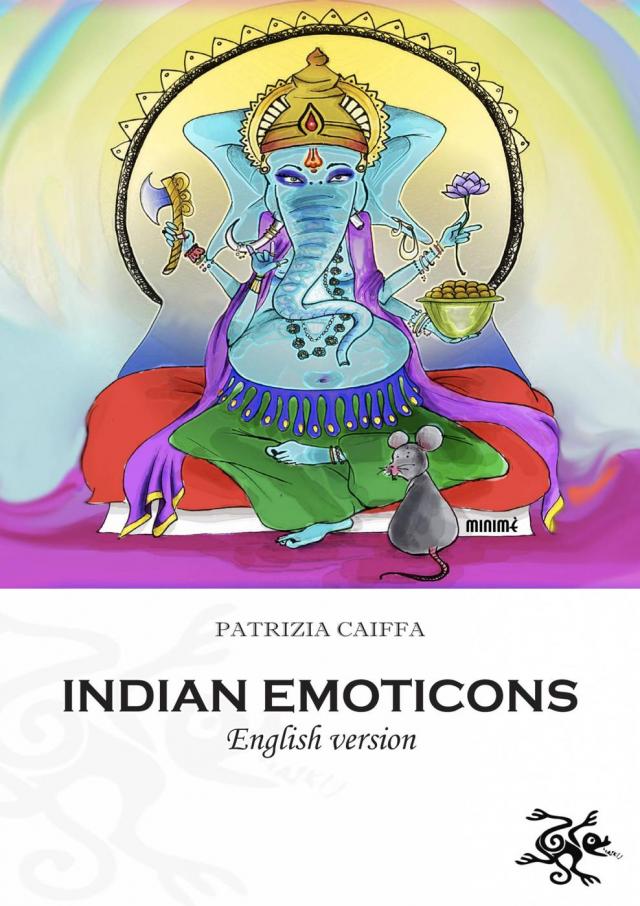
The statue of the god of abundance is pink, big-bellied and wears a golden crown. Under his long trunk he wears garlands of white, yellow or saffron flowers. At his feet, fires and wads of incense burn all day and night in his honor. At the end of August, the whole of India celebrates Ganesh, the elephant- headed god. Even the Hindu minorities in Arambol – a small village in the North of the catholic state of Goa, a colonial inheritance of Portugal – join together in celebration for a whole week.
Ganesh sits on his regal throne, and his messenger, a mouse, lies by his right foot. The Hindus pray to Ganesh for fertility and prosperity in their lives. They celebrate him with songs, firework displays, allegorical floats carrying massive images of him, men dancing wildly, drumming and offerings on the sea shore, until the final climax, when the many statues of Ganesh, all lined up on the beach, are lifted up and carried out to the sea, while the faithful eat popcorn that tastes of flowers.
In Arambol, among palm trees and returning monsoons, the procession begins in the street, with young boys sitting on the ground paying homage to the elephant god with their drums. Hundreds of people, in small familial groups, follow their personal statue – bought from local artists – in the dark alleys that lead to the beach, chanting prayers punctuated by sudden shouts, while in the sky all around fireworks explode just like New Year in Italy.
It is a gentle night, with a yellow crescent half-moon, and the people on the beach are singing and taking care to keep the fires lit in front of dozens of Ganesh statues. In some areas where the festival is more popular, for example in Mumbai, there are thousands of statues. And in the magical play of light and shade one can see women in bright colorful saris with overexcited children. Old people hold torches or arrange small parcels on the lap of the deity. Self-assured men break open coconuts for the puja as though they were made of butter. The coconut water is then poured onto the face and ears of the elephant-god, the last gesture before he is lifted up onto the men’s shoulders to be carried out to sea, followed by a shouting and exultant crowd.
The waves gently touch their feet, and the waters open to embrace the many statues of Ganesh, openly welcoming the gifts, offerings and hopes of these people. The statues, made of sand, will then disappear magically into the dreams of the sea.
*
Fishermen and arranged marriages
*
Palolem, August 2009 (Goa)
*
There is a soft, nostalgic sunset on the most beautiful beach in Goa, at Palolem, on the far South of this small Indian state that many do not even recognize as India, as it is Catholic and heavily westernized. Hordes of backpackers and hippies from Europe, Russia and Israel come to pass the winter here, basking in the sun and surfing the sea by day; marijuana, beer and rave parties by night.
In these parts jumping over a wave feels like flying lighthearted and free, with strangely happy feet swirling in the water. The ocean carries you, inviting you further out, towards its centre. But if you resist and stay, you can delight in sparkling white foam on your skin.
In this majestic half-moon beach surrounded by coconut trees, the fishermen, in a moment of respite from the monsoon, are setting out to the ocean or pulling their boats back onto the beach loaded with fish, the fruits of their labor. This very male ritual of fishing feels ancient and almost forever lost, with big wooden boats filled with strong, finely-woven nets, and a slightly rough-and-ready crew burnt by the tropical sun, but proud of their work.
And coming back to the shore is not for the weak: powerful arms and strong legs are needed here, dozens of them, with wooden platforms in the water, ropes and poles on each s ide of the boat, fore and aft, the chanted rhythm of “heave-ho” in konkani (the local language) unifying their power to pull this potbellied boat, weighed down by its precious burden.
At the end of this endeavor the men return slowly to their respective homes and dinners. Perhaps in these parts, their wives, all from arranged marriages, don’t wait for them with so much ardor, but with time they become accustomed to one other. Anyway, with the arrival of children and the watchful presence of the family and parents “everything falls into place”, as Laksmi, 16 years old, with a pretty, gentle face framed by the red scarf of her yellow salwar kameez, says with firm conviction.
She, the first born of five children from a family from Gujarat, was sent to these beaches to sell fake jewelry to penniless tourists. She works eleven months a year to keep her family and secure her dowry. She has never been to school but has learnt good English on the beach; she doesn’t know the word dream, and when she is asked what she hopes for the future the answer is predictable: “To marry a husband of good character by 21-22 and have children”. One dream is enough.
For the rest, she claims, “better an arranged marriage than a love marriage: with an arranged marriage, if there is a problem, the families will intervene, because they love us and know what is best for us. And it is not true that women cannot choose: when they present us with a potential husband we can accept or not”.
Not even an army of psychologists or ardent feminists would be able to uproot these traditions and convictions, which are so firmly ingrained and guarantee security over love, freedom and people's right to choose the life they want. Perhaps only the inexorable advance of globalization and modernization, after having crushed and destroyed the most real, authentic and ancient part of India, will also bring different ways, awarenesses and aspirations. But will this be a good or a bad thing? Who knows?
*
Delhi Monsoon
*
Delhi, August 2009 (Maharastra)
*
I watch in amazement as Indians dance, laugh, play and help one another, under a relentless monsoon flooding the main bazaar in Delhi, in the central, popular, infamous neighborhood of Paharganj, with knee-high muddy water.
I see half-naked boys taking advantage of the rain to have a shower under the violent downpours of water running down from the dilapidated buildings, drunk with laughter from the joy of a new crazy game: climbing onto the roof of the cars parked in front of shops selling chapati, textiles or spices, to enjoy the water thundering down, then sliding down the windshields screaming, as if they were in a real playground.
I see taxis bogged down in muddy water up to their windows, their engines seized up, and drivers getting out to push, drenched with rain, while cheerful passengers in turbans sit in the driver's seat to try the impossible, laughing. Droves of young white tourists and backpackers help them, almost up to their waists in water. Elegant ladies in colored saris and gold jewelry try unsuccessfully to shelter under the small canvas roofs of struggling cycle rickshaws, while the “human horses” on the bicycles, soaked to the bone, uncaringly defy the downpour.
I see bare feet, wet bodies and the usual, incredible Indian humanity sharing, downplaying and accepting the unavoidable which is coming down from the skies, while shops flood, mopeds and tuk tuks (the traditional three-wheeled taxis) flounder in the stinking waste of holy cows and cars stop to exhale their last wet breaths.
An unexpected, wild celebration, drunk from the waters of the sky as if it were wine.
In the west this same event would bring anxiety, panic, the fire services, the civil defense, and then debates on the TV and in the newspapers, because “the drains don’t work”, because “the precipitation level this year is higher than normal”, because “it was not built as it should be” and for sure, no one would be smiling.
It stays in the heart like a precious revelation, the profound joy of that moment, and the sad longing for what we may have inexorably lost, or never wanted to learn.
*
Kalighat
*
Kolkata, August 2010 (Bengal)
*
At first sight, Kolkata is not the terrible “city of joy” of our literary imagination. The Calcutta of the journalist and benefactor Dominique Lapierre is gone, or is in hiding, in the face of changes brought by modernization. It could be because the “human horses” who pull people with rickshaws are now quite rare. It could be because the untouchables that sleep on the pavements at night are many, but not as numerous as in Mumbai. Men, women, old people and children who never cry. The roads of Kolkata are wider and cleaner, and the air is easier to breathe than in dusty Delhi, now being disemboweled by the work underway for the Commonwealth Games, later to be exposed as a disaster of disorganization, amongst charges of corruption and endless controversy.
The city we had most feared – for its legendary fame as the dirty abode of miserable and interminable slums – reveals itself as noisy and chaotic, but all things considered also green and welcoming. The intellectual and cultural capital of India, in the State of western Bengal, bestows its secrets to those who know how to appreciate them.
Kolkata is not just Mother Theresa welcoming the dying in the Mother House near the temple of Kalighat. The poor know this place and camp out on the steps. And this year they are also celebrating the centenary of the birth of the saint – the canonization process is underway, by unanimous request of the people – and marble statues and busts of the “pencil of God” (as she herself liked to be called) are being put up, to make the city worthy of the woman who made it so famous throughout the world.
Mother Teresa was well acquainted with the traditions of the people she gave her life to, so well represented and real in the nearby temple dedicated to Kali, wife of Shiva, the black goddess with fierce eyes and many arms depicting creation and destruction. It is said that the temple of Kalighat was born out of the toe of the right foot of Sati, unfortunate first wife of Shiva, burnt and cut into fifty pieces, then scattered all over India, each now a place of worship revered by the faithful.
Kalighat greets us with its vendors of red hibiscus garlands at the entrance of the temple door. It is like entering through a fragrant, crimson door to a mystery. But for tourists it is almost impossible to go there alone. A self-styled guide follows us all the way. It is impossible not to accept this reception: we are in a holy place and must respect rules that are foreign to us. It is difficult to work out if this is a real custom or one of the many ways to get money out of western tourists.
In some way, his bland explanations help us to orient ourselves in this magical and mysterious world. As soon as we enter, on the left, there is a big tree trunk with dry branches, enclosed in a cage: it symbolizes the tree of life and it has been there for about three centuries. The faithful hang pink stones said to be from the Ganges on its branches, offering wishes for fertility, health and wellbeing for all the family and newly born babies.
It is mostly women who visit Kalighat to ask for a child and good health for the baby. A young woman in a sari of red and ivory flowers, with long black hair in a ponytail, shows us her tiny baby with pleasure and pride, just a few months old. Her sweet smile expresses joy and satisfaction for a wish granted. The little child gives herself unknowingly to the rituals of the ancient priestess, who pours milk and water on her forehead with a silver spoon. At the end of this, her young father tries to offer the woman some money, but strangely she refuses.
Our guide invites us to leave our shoes by the entrance and gives each of us a beautiful hibiscus garland. Some young people nearby are busy stringing flower-buds, also red, together to make garlands. It is a jubilation of colors and smells, heavenly perfumes and terrible odors blending together, as they do everywhere in India.
The first stop is in front of the formidable Kali. Two fierce eyes in a black stone. We are only able to catch a glimpse of them for a few brief instants, through the packed crowd around her. The ritual involves taking a flower from the garland, touching it to the forehead and throwing it towards the goddess while reciting a mantra. This lightning-quick gesture, quite incomprehensible to our belief systems, briefly reveals its inherent power, given by the immense trust that these men and women bestow on their idols.